2.4 GHz Omnidirectional Chain
A frequency-matched path built around a 2.4 GHz amplifier stage and a corresponding omnidirectional antenna. Suitable when broad horizontal coverage is required at this band.

Direct RF Manufacturer
CorelixRF is a direct RF manufacturer providing project-based wideband transmit chain solutions built around SDR source modules, RF power amplifiers, and matched antenna architectures for OEM integration, system development, and deployment-oriented RF projects.
Factory-coordinated source, amplification, and antenna paths for faster evaluation and clearer system integration.

Built for engineers, integrators, and project teams that need a matched RF transmission path instead of isolated components from multiple suppliers.
Need matched source, PA, and antenna stages configured for specific platform enclosures and thermal limits.
Need a clearer architecture for evaluation, bench testing, and validation of the entire transmission path.
Need flexible frequency generation paired with reliable, deployable RF power and output paths.
Need a single supplier that can coordinate key RF building blocks, reducing sourcing and integration risk.
These project types often require more than individual RF components. They require a clearer definition of the full transmission path before hardware selection and system integration can move forward efficiently.
Many RF projects do not slow down because of one module. They slow down because the chain is not coordinated early enough. Here is how CorelixRF structures the solution around real integration needs.
Source, PA, and antenna may not be well aligned in real use despite paper specs.
Control methods and monitoring logic may differ drastically across suppliers.
Omnidirectional and directional paths are often not defined early enough.
Installation, cooling, and enclosure planning are delayed until components arrive.
When integration issues arise, responsibility is split across multiple vendors.
Reduce frequency mismatch during early evaluation and avoid re-selection cycles.
Improve consistency between source, amplifier, and antenna selection.
Surface thermal, power, interface, and mounting constraints earlier in the project.
Reduce communication overhead and shorten integration and decision timelines.
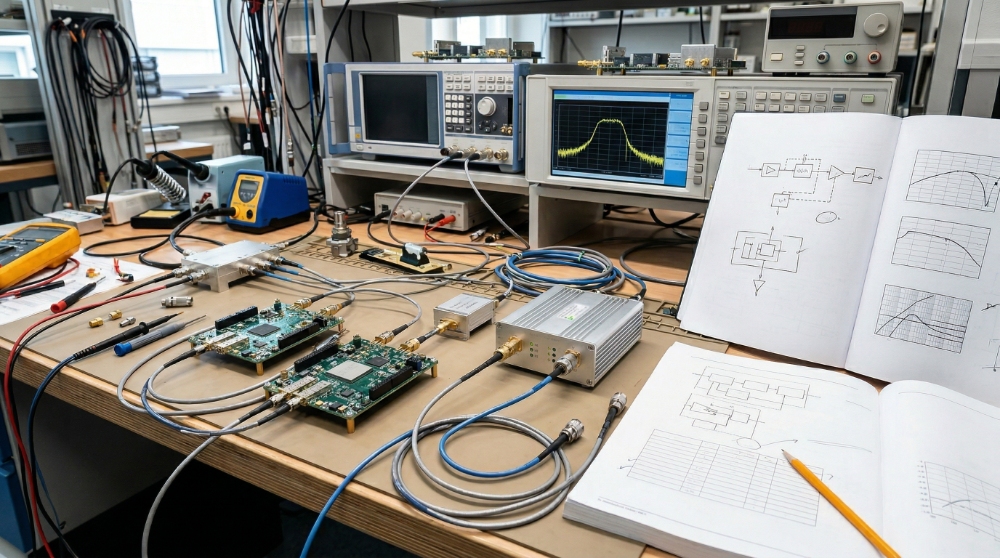
System Architecture
A wideband transmit chain is not a single product. It is a coordinated RF transmission path. It starts with the signal source, continues through power amplification, and ends in a matched output stage. Successful deployment depends on how well these layers are matched in frequency, interfaces, and integration conditions.
The source layer defines operating frequency, signal behavior, and control flexibility across the chain. In projects that require wideband or multi-band transmission capability, source flexibility affects every downstream decision.
The amplifier layer raises the signal to the required transmission level through band-matched RF power modules. This layer strongly affects usable power, deployment limits, and matching with the output stage.
The antenna stage determines how RF energy is delivered into the field. The choice between omnidirectional and directional output fundamentally changes the entire deployment strategy and effective coverage.
This layer includes control coordination, power input, thermal planning, mounting, monitoring, and general system compatibility. It determines whether the configuration remains theoretical or becomes practical.
CorelixRF structures transmit chain solutions around available RF power blocks rather than presenting the system as one universal all-band unit. This gives project teams a more realistic starting point for evaluation. These standard frequency and power blocks are used as practical starting points for evaluation. They do not represent the full limit of available project configurations.
Current standard examples include sub-band and band-specific PA modules ranging from 50 W to 200 W.
| Frequency Range | Module Type | Output Power | Monitoring | Typical Application |
|---|---|---|---|---|
| 500–700 MHz | DDS RF PA Module | 200 W | RS485 | Sub-band transmission chain |
| 1000–1300 MHz | DDS RF PA Module | 200 W | RS485 | Mid-band RF output system |
| 2400–2485 MHz | DDS RF PA Module | 150 W | RS485 | 2.4 GHz omnidirectional chain |
| 5150–5350 MHz | DDS RF PA Module | 50 W | RS485 | Compact 5.2 GHz chain |
| 5725–5875 MHz | DDS RF PA Module | 150 W | RS485 | 5.8 GHz omnidirectional chain |
Additional band, power, interface, and output combinations can be reviewed based on project-specific requirements.
Flexible signal generation is the foundation of a configurable transmit chain.
CorelixRF’s SDR source layer provides the frequency flexibility needed for project-based RF transmission paths. A source module covering 100 MHz to 6000 MHz with dual independent outputs creates a practical foundation for systems that require adjustable center frequency, configurable output behavior, and coordination with different RF amplifier stages.
In transmit chain design, source flexibility is valuable not because it solves everything alone, but because it makes wider system matching possible across multiple downstream PA options. In many projects, source flexibility directly affects how the rest of the transmit chain is structured and evaluated.
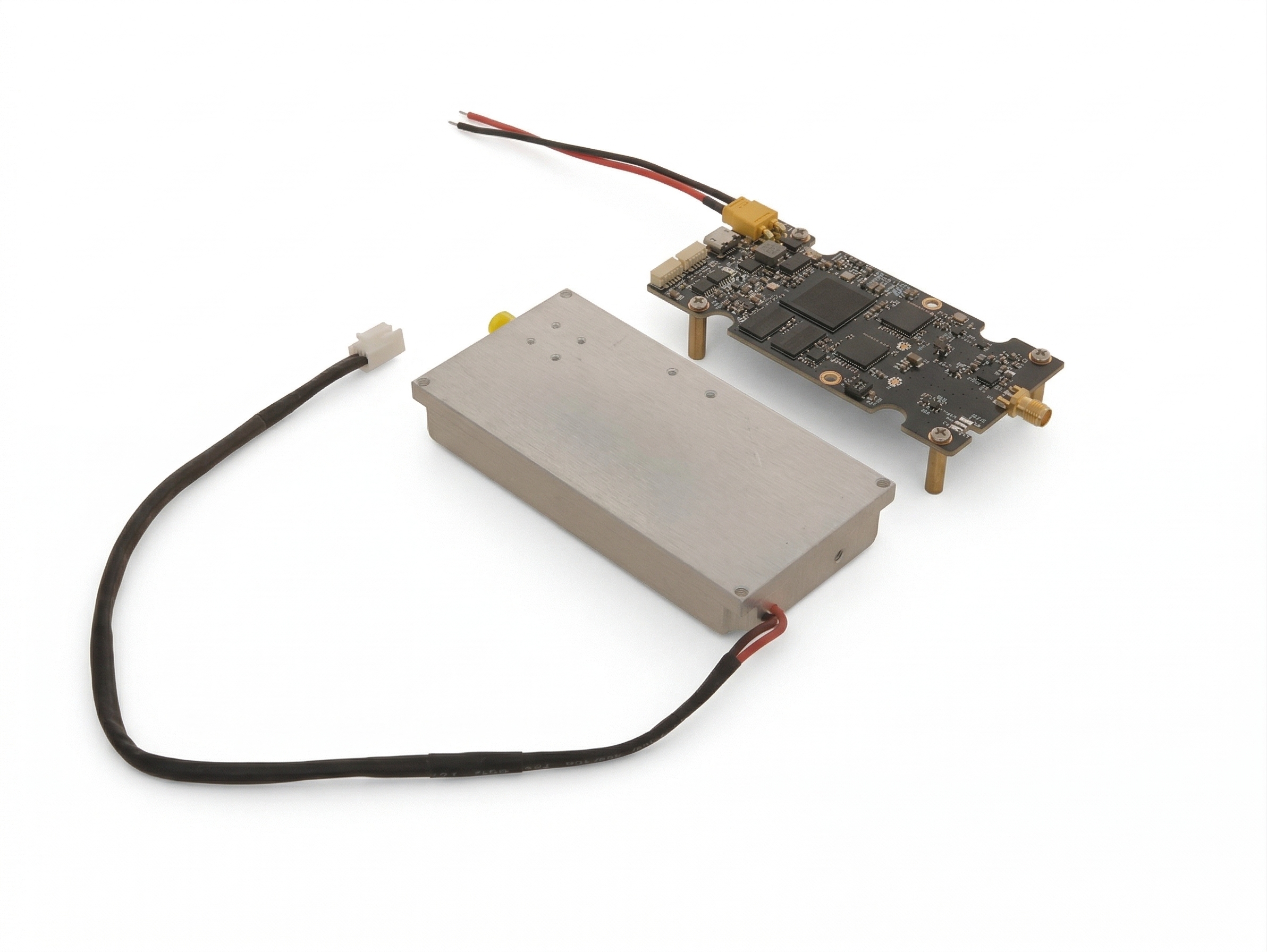
Omnidirectional and directional output paths solve different deployment problems.
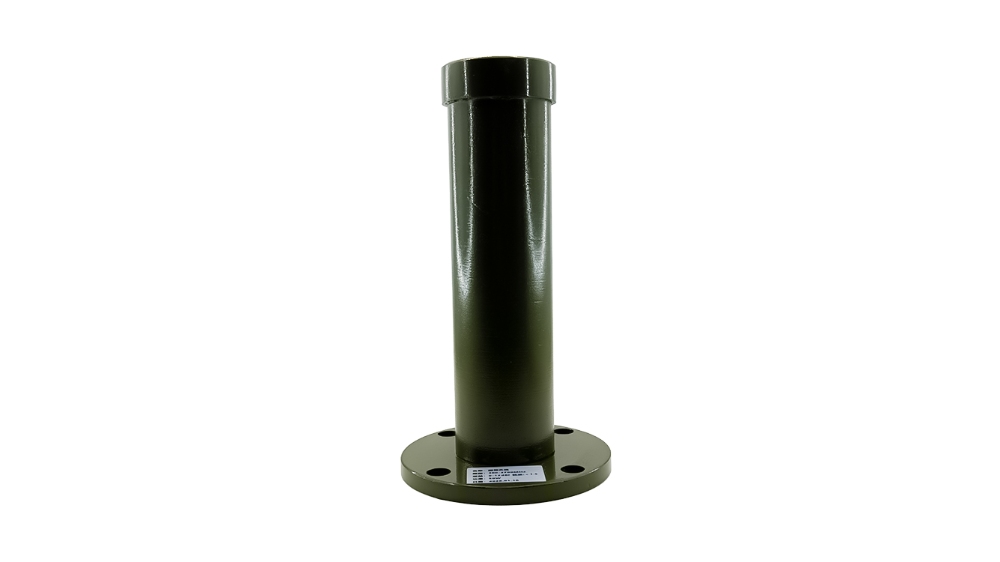
Use an omnidirectional architecture when the project requires horizontal area coverage across surrounding directions. This type of output is often more suitable for platform-mounted, vehicle-mounted, or site-level configurations where broad coverage matters more than concentrated energy. This is typically the preferred starting point when surrounding coverage is more important than maximizing output in a single direction.
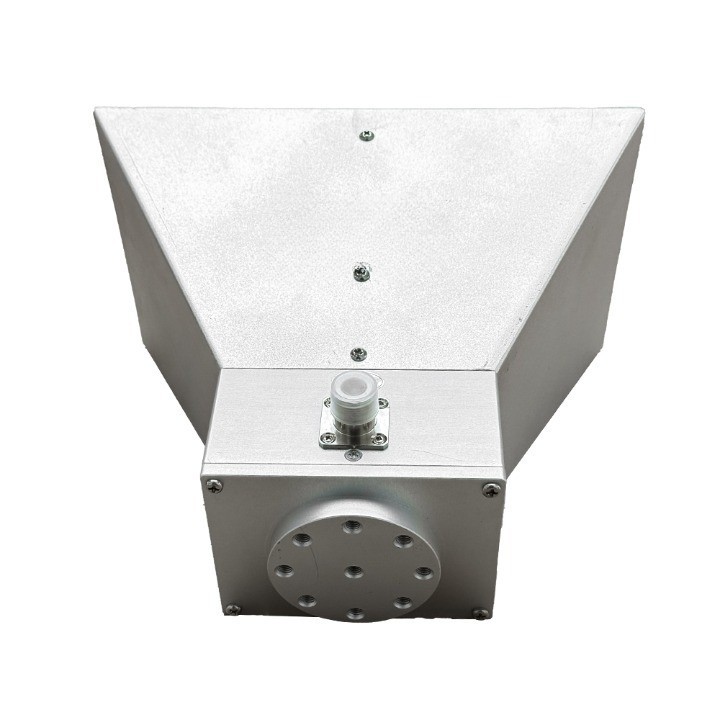
Use a directional architecture when the system needs to focus RF energy toward a defined area, sector, or path. This approach is more suitable when higher effective output (EIRP) in one direction is more important than broad, all-around coverage. This is typically the better choice when the project requires focused energy delivery and higher effective output along a defined path.
Typical ways source, amplification, and output stages can be combined into practical paths.
These examples are reference paths rather than fixed product bundles. Final configurations should be reviewed based on target frequency, required output power, output architecture, and integration constraints.
A frequency-matched path built around a 2.4 GHz amplifier stage and a corresponding omnidirectional antenna. Suitable when broad horizontal coverage is required at this band.
A band-aligned output path using a 5.8 GHz amplifier stage and matched omnidirectional output. Suitable for projects that prioritize consistent frequency matching.
A more compact high-band path where lower output power and smaller system size are more important than maximum transmission level.
A wider-output concept in which the source and antenna support broader frequency coverage, while the RF amplifier stage is selected according to the target band.
Standard platforms are the starting point, not the limit.
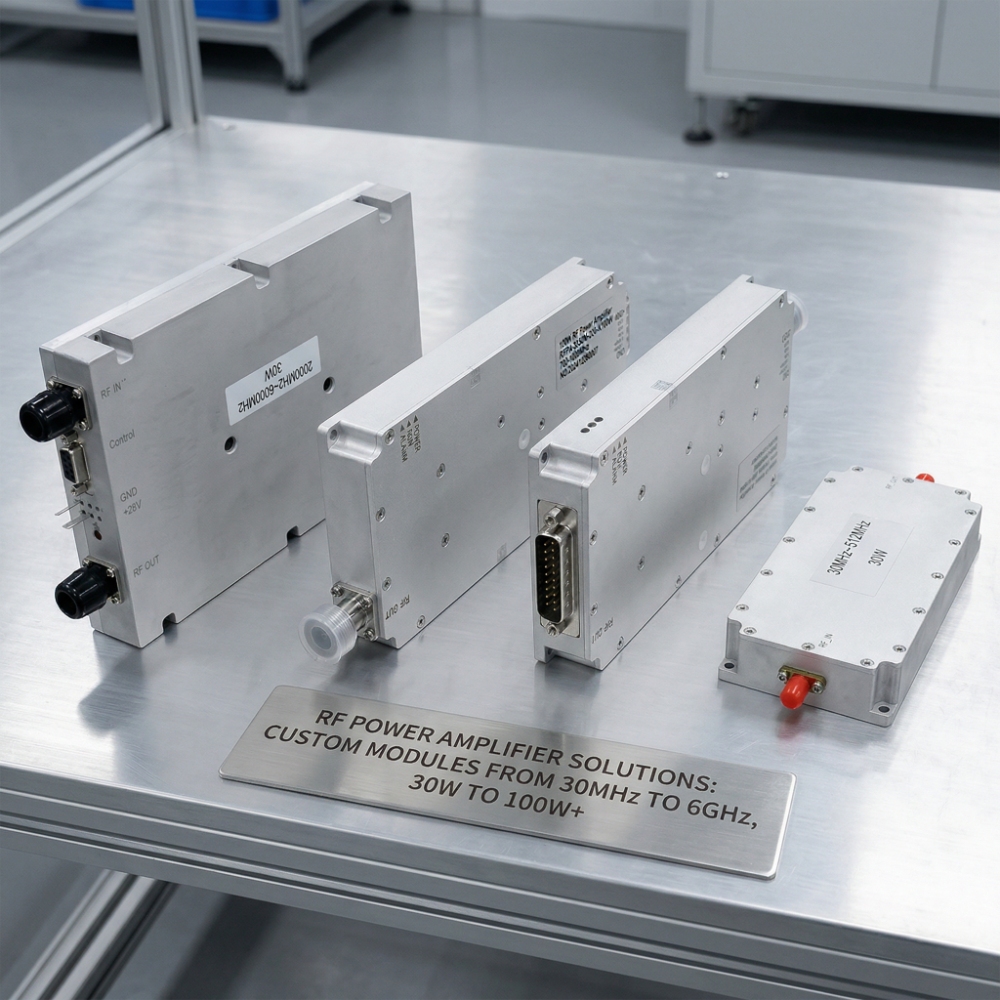
For many transmit chain projects, standard modules provide a useful evaluation baseline, but final project needs often require adjustment. CorelixRF can review customization needs across multiple layers of the chain, including frequency band, output power, interface method, antenna type, connector style, integration structure, and other practical requirements related to the final system path.
Standard platforms can be used as engineering baselines, while project adjustments can be reviewed at the frequency, power, connector, interface, and mechanical integration level.
Factory Capabilities
A transmit chain should be supported by real engineering coordination, not only by product descriptions. CorelixRF structures project discussion around frequency path definition, module compatibility, output architecture, and integration feasibility.

Used to review output behavior, interface control, and protection awareness before project deployment.

Supports consistent implementation of module structure, interface layout, and integration readiness.

Helps project teams move from evaluation samples to clearer production and shipment coordination.
Less coordination risk, clearer matching logic, and a more practical path to deployment.
Separate Sourcing
Factory-Coordinated Solution
A structured transmit chain architecture is useful across engineering, OEM, and deployment-oriented RF projects.
Suitable for projects where signal flexibility, testing convenience, and architecture visibility are important during development.
Useful when the platform needs to support more than one target band across a coordinated system structure.
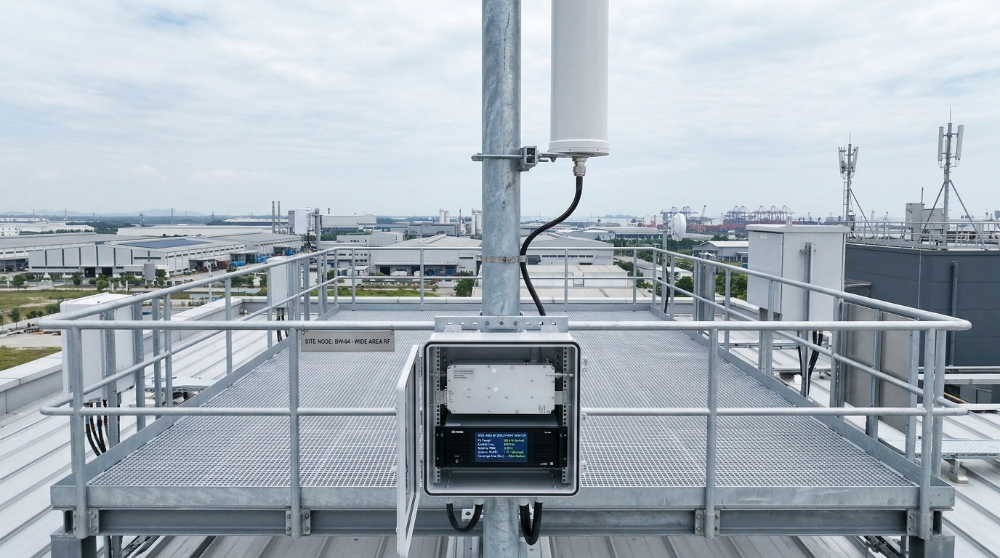
Suitable for deployments where broad surrounding coverage is more important than directional concentration.
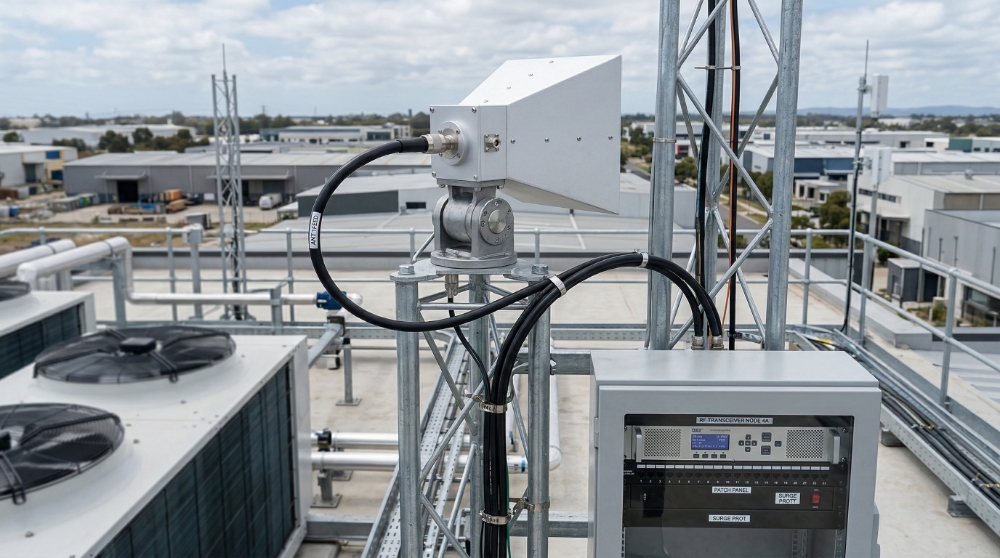
Suitable when the goal is to focus RF energy toward a defined area or transmission direction.
Useful for customers who need RF transmission building blocks that can be reviewed as part of a larger subsystem.
Suitable for project teams that need a more practical way to assess source, amplifier, and output combinations before deployment.
Next Steps
Move from system-level planning to product-level evaluation. If you already know which part of the chain you want to evaluate first, explore the relevant product category directly.
Answers to the questions buyers and engineering teams usually ask before evaluation.
No. The source can cover a wide frequency range, but the amplifier and antenna path are typically configured by band for practical matching.
Yes. Share the target band, output requirement, and preferred output architecture, and a practical configuration path can be proposed.
Yes. Customers may evaluate the source layer, amplifier stage, antenna stage, or a combined path depending on project needs.
Choose omnidirectional when broad surrounding coverage is required. Choose directional when output should be concentrated toward a defined area or path.
Project-based customization can be reviewed depending on the target band, required power level, interface needs, and integration requirements.
Yes. The source and amplifier stages can include practical control, monitoring, and protection features depending on the selected configuration.
Target frequency, required output power, preferred output type, number of channels, and any integration constraints are the most useful starting points.
Yes. Technical documentation, interface protocols, and typical performance data can be shared to support initial engineering reviews.
Yes. Form factor, thermal management, and connector layouts can be coordinated to match specific OEM and system-level enclosure requirements.
Recommendation is based on aligning the required EIRP, acceptable thermal limits, and deployment environment to ensure the PA block and antenna pattern work efficiently together.
Share your target band, output requirement, and deployment preference to receive a practical factory-based recommendation. The clearer the project inputs, the easier it is to identify a suitable source, amplifier, and antenna combination.
In most cases, recommendation starts with target frequency, required output power, preferred output pattern, and any enclosure, interface, or thermal constraints.
ALL INQUIRIES ARE TREATED AS CONFIDENTIAL. WE DO NOT SHARE YOUR INFORMATION WITH THIRD PARTIES.