
01 / Application
Wideband RF Transmit Chain
High-linearity broadband power stage for multi-band transmit systems, reducing filter switching complexity and hardware count.
Factory-direct 30W to 200W broadband RF amplifier modules for wideband RF system integration, with 28VDC native design, documented RF validation, and OEM adaptation support from CorelixRF.
Why CorelixRF
We support RF integration projects that require engineering coordination, production consistency, and documented validation — not just a datasheet and a shipping label.
Pre-quotation technical review covering operating mode, drive level, thermal budget, and system-level compatibility before production commitment.
Pre-Quotation ReviewCustom frequency optimization for narrower operating bands — improving gain flatness and efficiency within your specific transmit requirements.
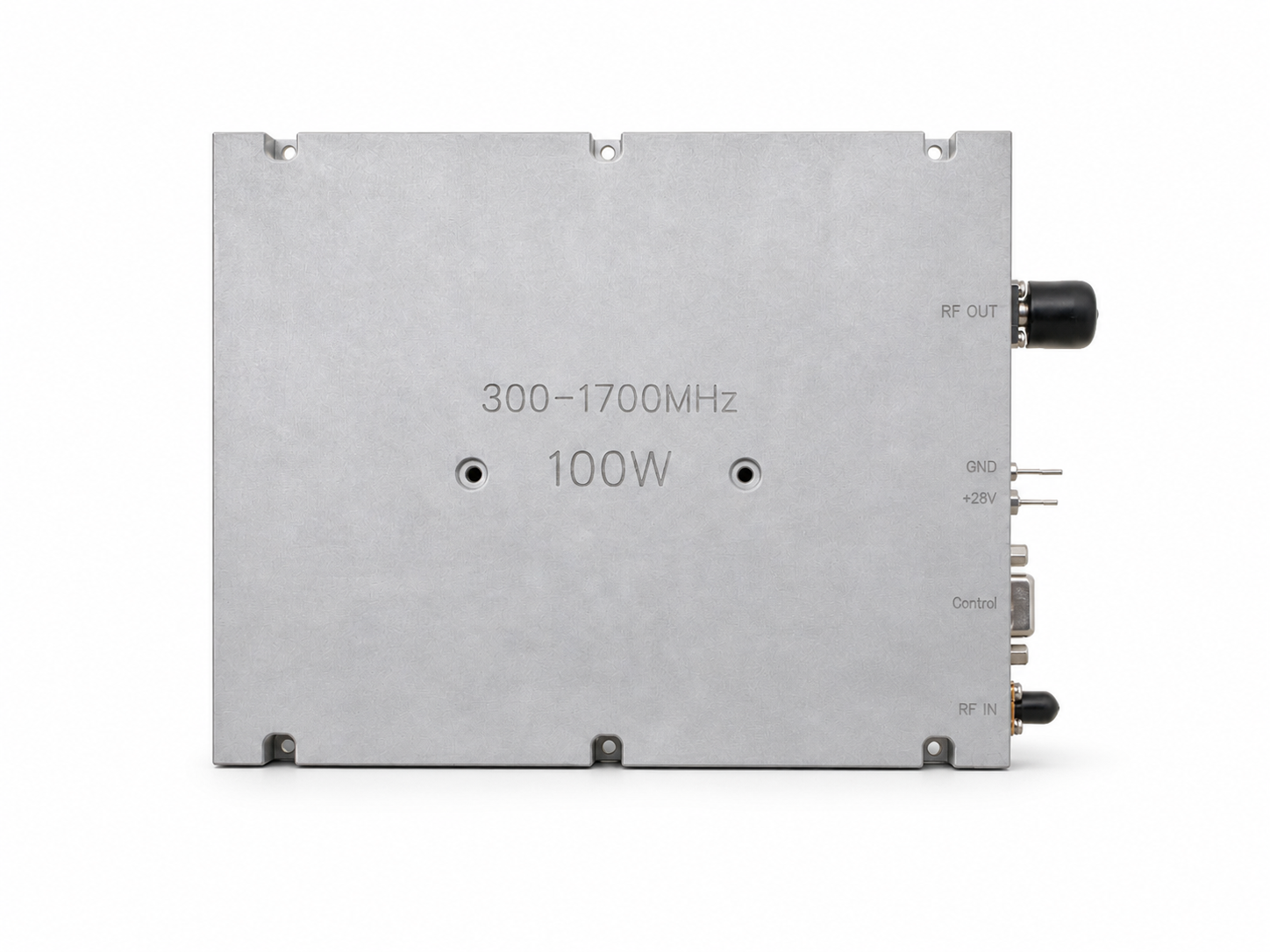
Custom Frequency SubsetIn-house RF assembly and machining under ISO 9001 process control. Unit-level validation data available with shipment, scope confirmed during technical intake.
ISO 9001 Process ControlThermal interface guidance, mechanical drawing packages, and OEM/ODM feasibility assessment to reduce risk in enclosure and system-level integration.
OEM · ODM FeasibilityIntegration Reality
Bridging the gap between headline specifications and real-world system-level requirements.
Specifications often lack clarity around thermal limits, CW vs pulse operation, and duty cycle conditions — leading to mismatched expectations.
Generic datasheets may not reflect actual shipped hardware performance across the full operating band, creating acceptance risk.
Incomplete airflow planning, enclosure thermal path design, or mounting guidance can lead to failures during system-level qualification.
Operating conditions are defined and confirmed during engineering review — before quotation is issued.
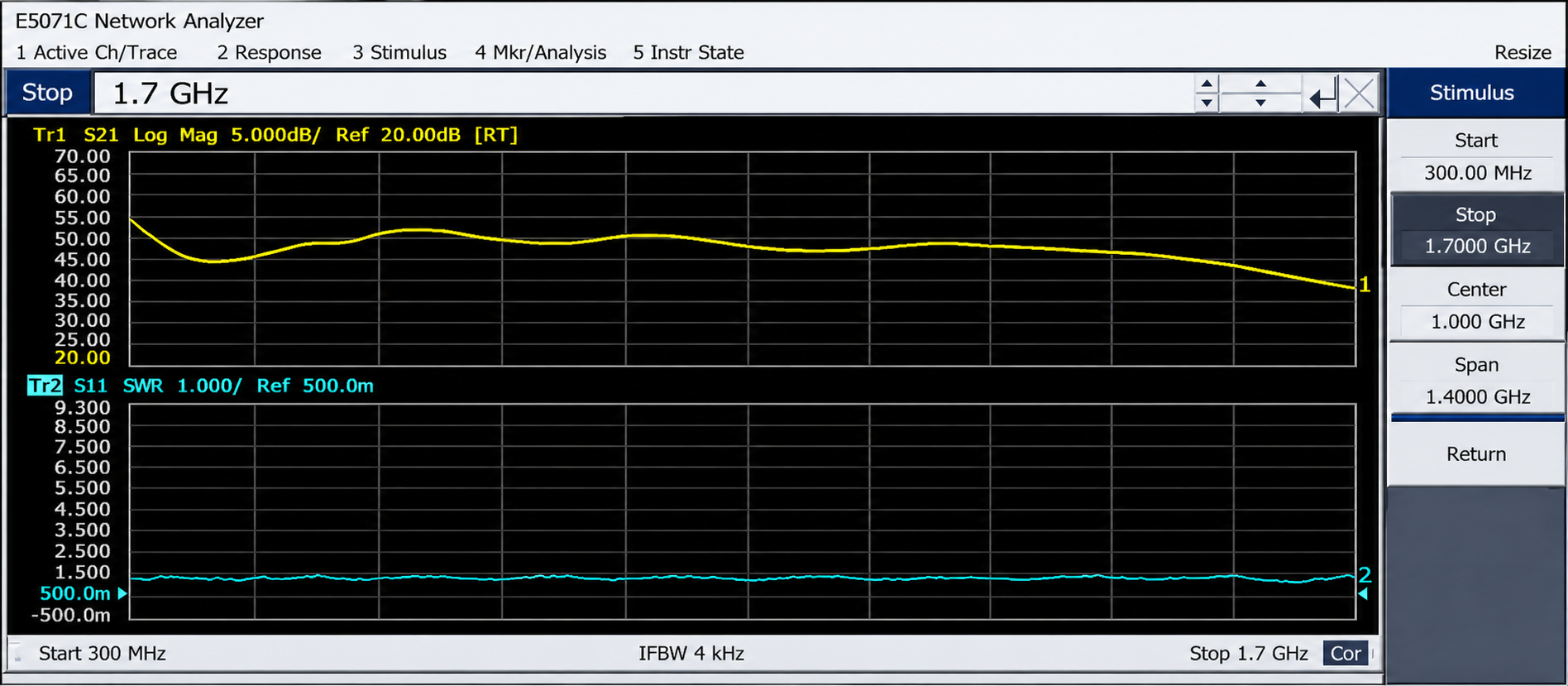
Shipment test records — gain, output power, and input VSWR across the operating band — are available per project scope.
Mechanical outline drawings, connector references, and thermal integration guidance are provided to support airflow planning and enclosure integration.
Confirm the following parameters before submitting your RFQ. This helps our engineering team provide an accurate technical assessment and quotation.
Standard Models
Standard wideband models listed below. Custom frequency subsets are available for improved gain flatness and efficiency within your target operating band.
Swipe horizontally to compare model specifications.
| Model Number | Frequency | Pout | Gain | VSWR (In) | Supply | Size (mm) | Review |
|---|---|---|---|---|---|---|---|
| CRF-PA-300M1700M-30W | 300–1700 MHz | 30W | 45 ± 1 dB | ≤1.8 | 28VDC | 125×59×21.5 | |
| CRF-PA-300M1700M-50W | 300–1700 MHz | 50W | 47 ± 1 dB | ≤1.8 | 28VDC | 125×59×21.5 | |
| CRF-PA-300M1700M-100W Most Requested | 300–1700 MHz | 100W | 50 ± 1 dB | ≤1.8 | 28VDC | 200×158×25 | |
| CRF-PA-300M1700M-150W | 300–1700 MHz | 150W | 52 ± 1 dB | ≤1.8 | 28VDC | 200×158×25 | |
| CRF-PA-300M1700M-200W | 300–1700 MHz | 200W | 53 ± 1 dB | ≤1.8 | 28VDC | 200×158×25 |
All documentation is available during engineering intake. Contact engineering →
Use Cases
High-linearity broadband power stage for multi-band transmit systems, reducing filter switching complexity and hardware count.

Wideband power source for antenna characterization, component-level testing, and broadband EMC pre-compliance validation setups.
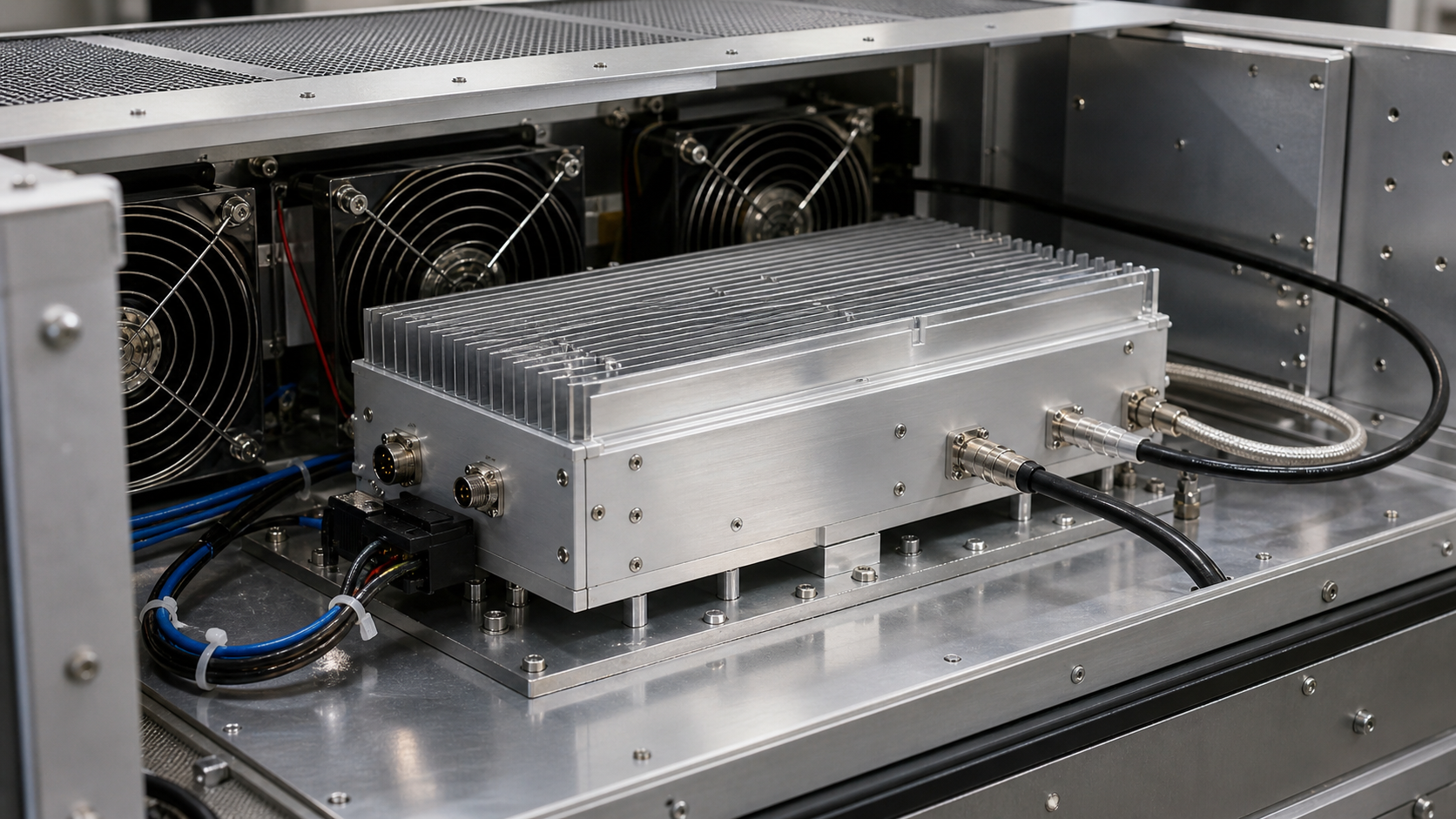
Air-cooled modules with documented mechanical interface specifications, designed for direct mounting into project-specific enclosures.
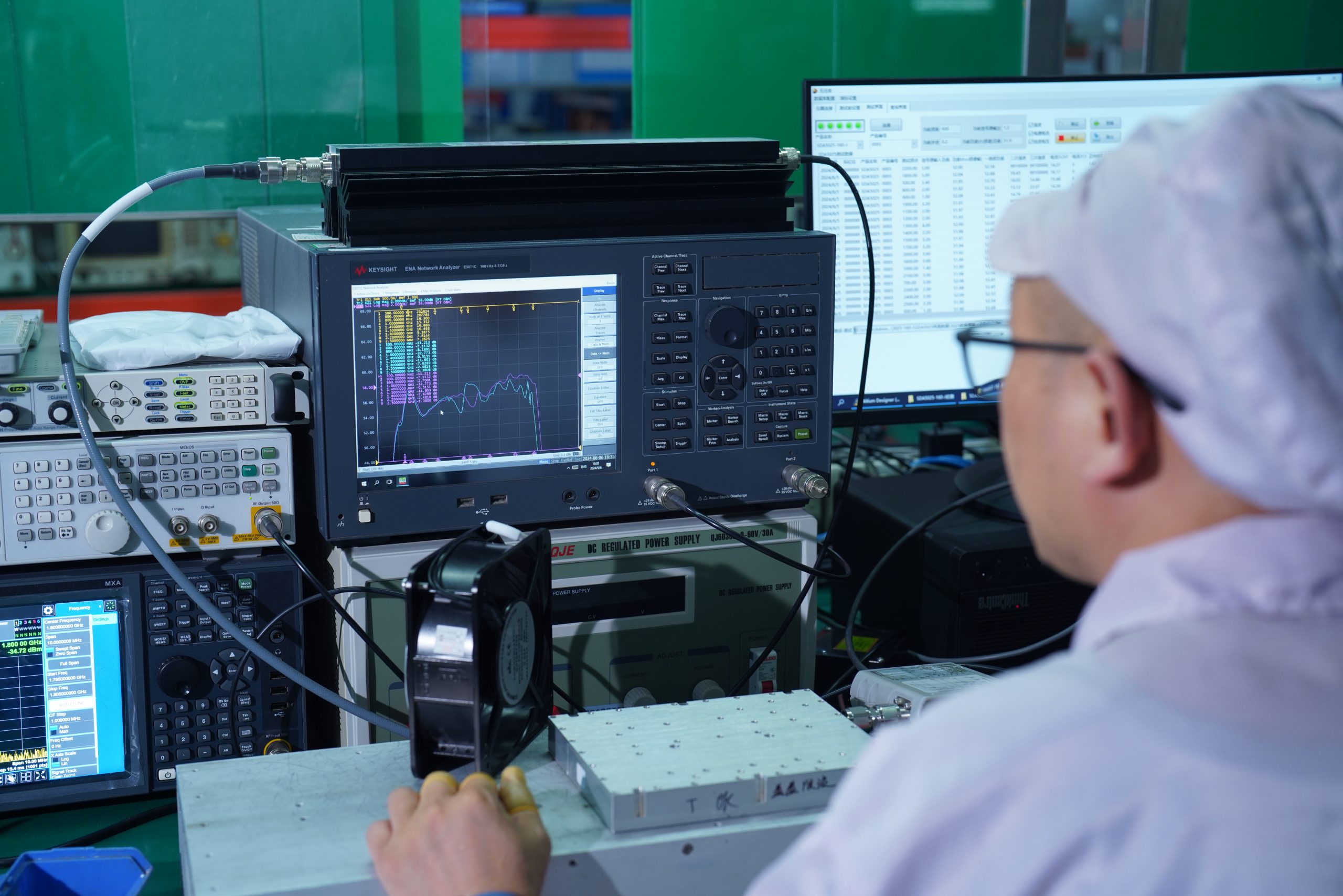
Consistent gain across the operating band supports multi-standard communication test rigs requiring repeatable power delivery.
Factory Quality
In-house validation and assembly under ISO 9001 process control.
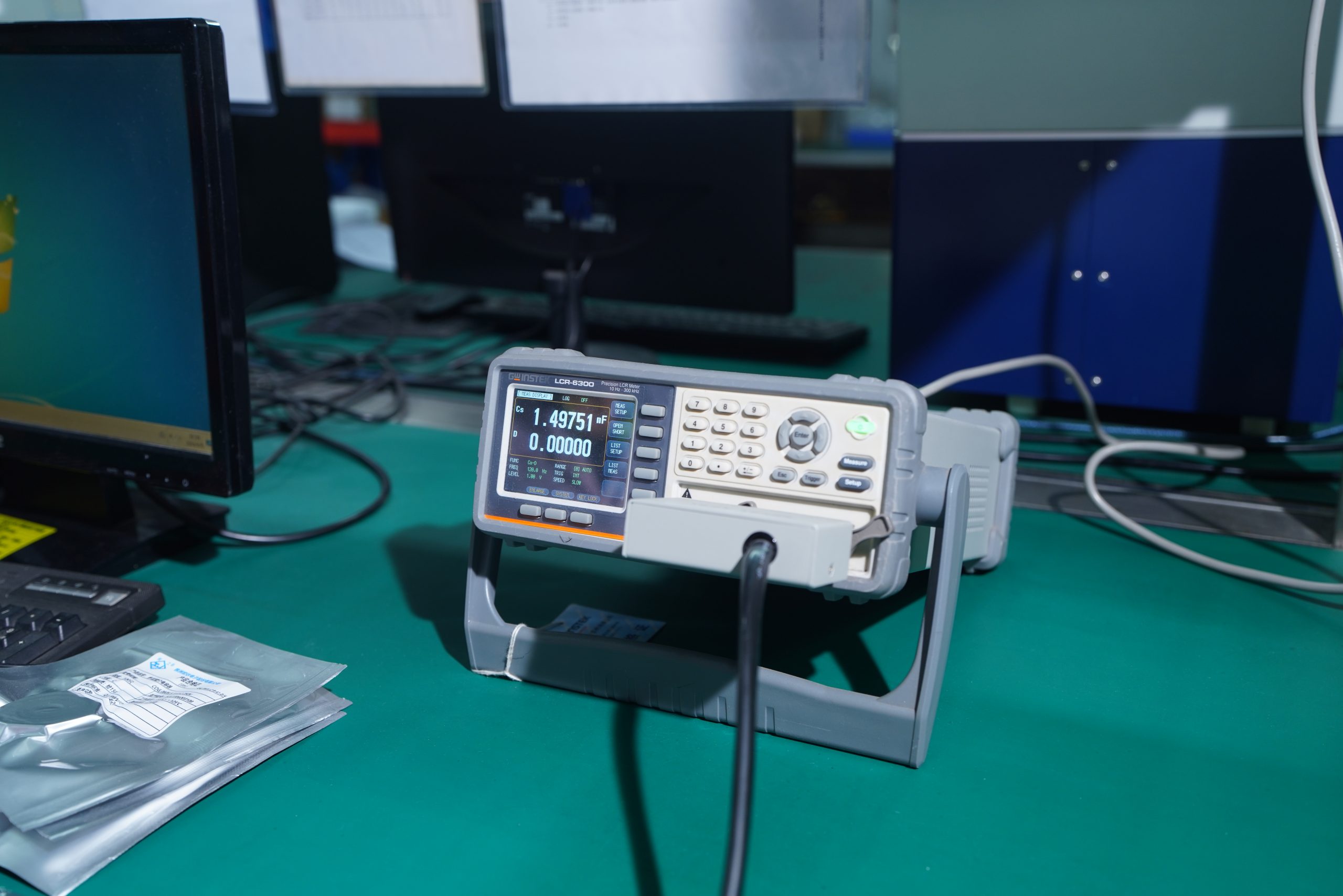
Full-band gain and power measurement on production units. Test report format available for incoming inspection review.
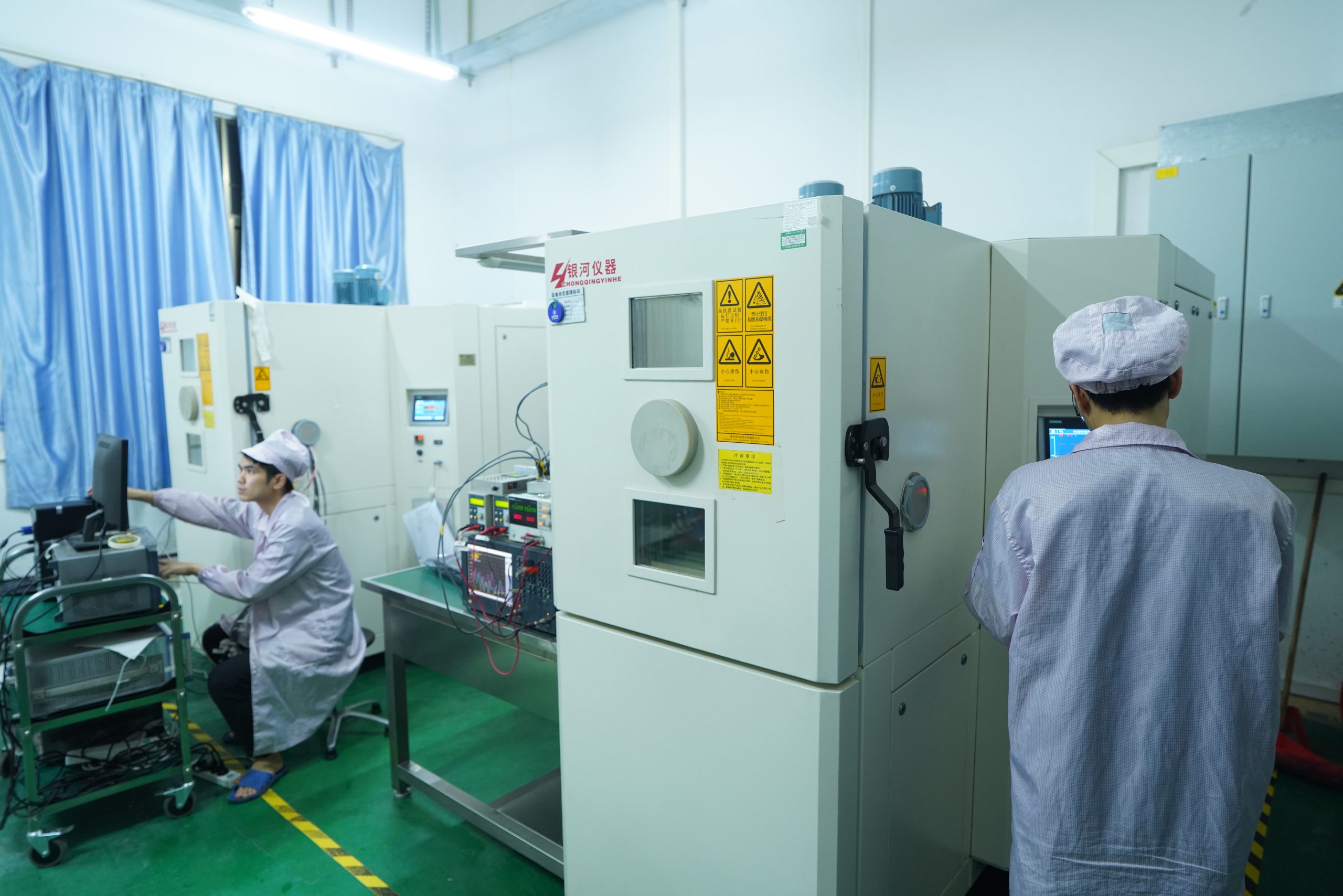
Operating stability validated under thermal load to confirm performance in real-world deployment environments.
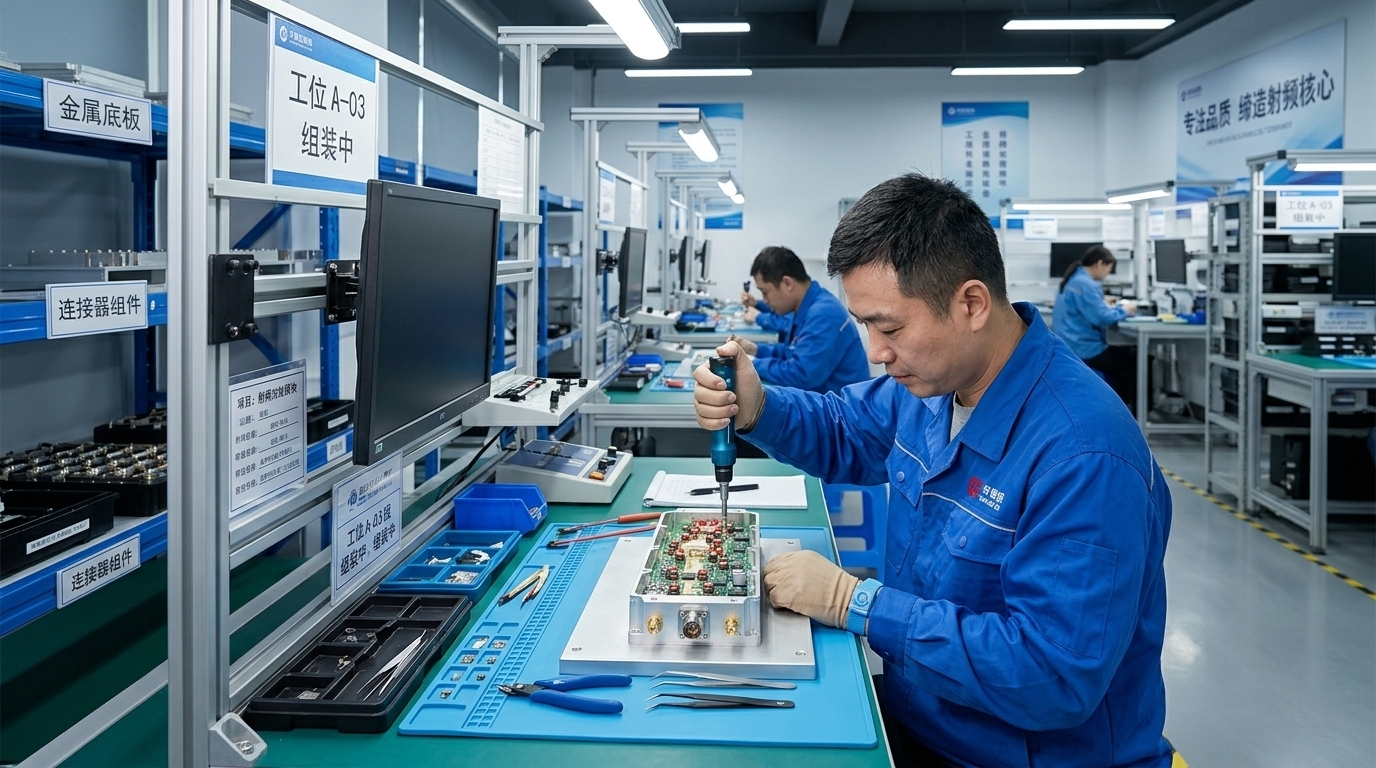
RF assembly, mechanical machining, and final integration performed in-house for production traceability.
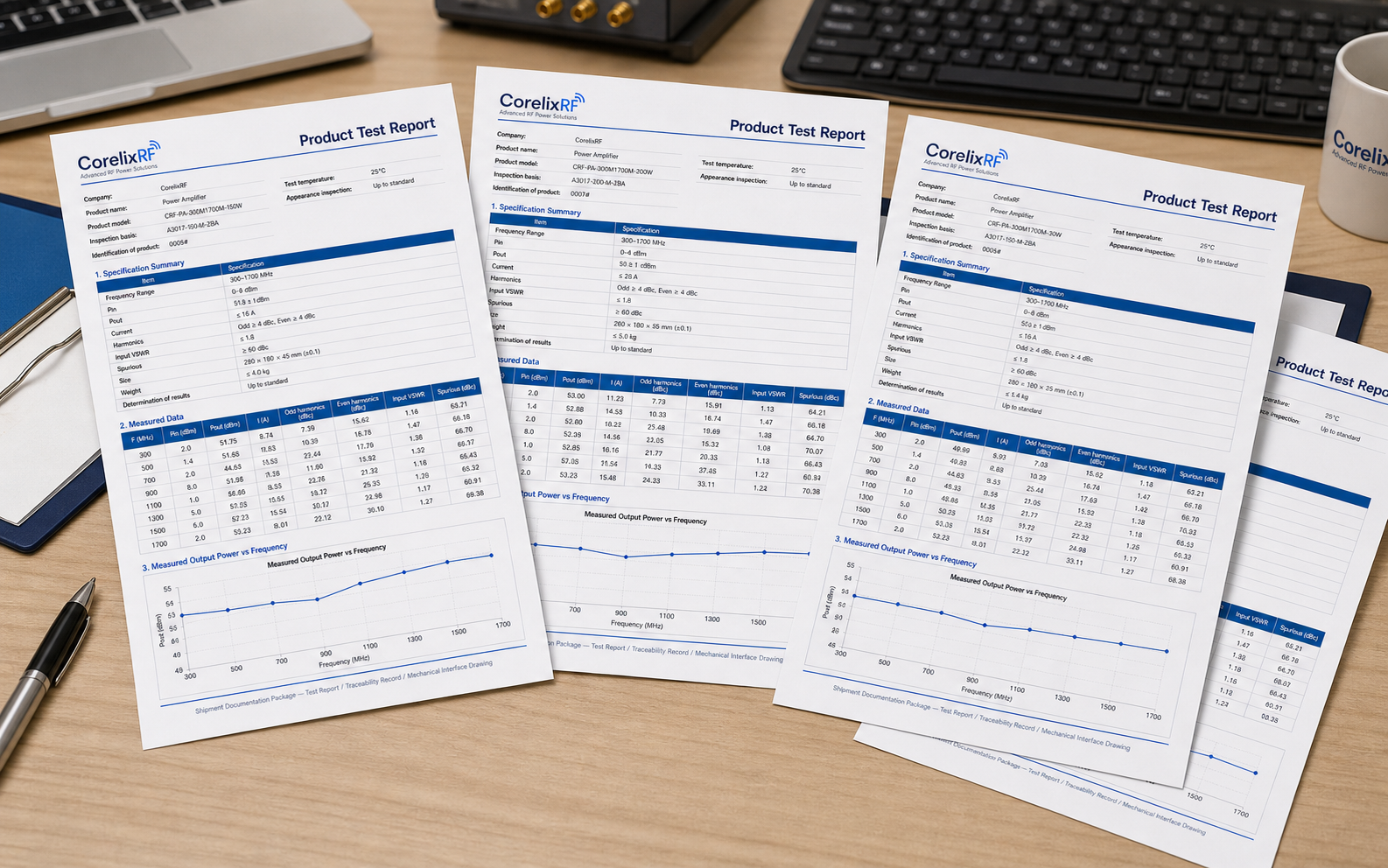
Shipment documentation scope — test reports, traceability records, and mechanical interface drawings — confirmed during engineering intake.
Technical & Procurement
Typical input drive for rated output is 0 to 8 dBm under datasheet test conditions. Specific drive margin should be confirmed per model and target operating condition.
Yes. Standard units cover 300–1700 MHz, and custom frequency subsets can be reviewed for flatter gain and better efficiency within your target operating range.
We recommend 1.2× to 1.5× current headroom above maximum rated draw as an engineering recommendation, subject to operating mode and compression target.
Standard models in this series use air cooling. Mechanical outline, connector references, and integration dimensions are available in the drawing package.
Standard RF connectors are SMA-Female for input and N-Female for output. Alternative connector configurations and custom mounting details can be reviewed for OEM integration projects.
RF test data covering gain, output power, and input VSWR across the operating band is available with shipment. Sample report formats can be provided during the RFQ stage.
Yes. We support evaluation quantities for engineering assessment and system-level qualification.
Yes. We can execute NDAs before technical deep-dives or sharing custom mechanical drawings, electrical integration data, or application-specific performance information.
Submit an RFQ through our engineering intake form. Our team reviews your operating parameters, confirms technical feasibility, and provides a detailed quotation.
Engineering Intake
Our engineering team reviews your project requirements — operating mode, frequency range, thermal constraints, and integration context — before issuing a quotation.